Let's Connect to See More Details!
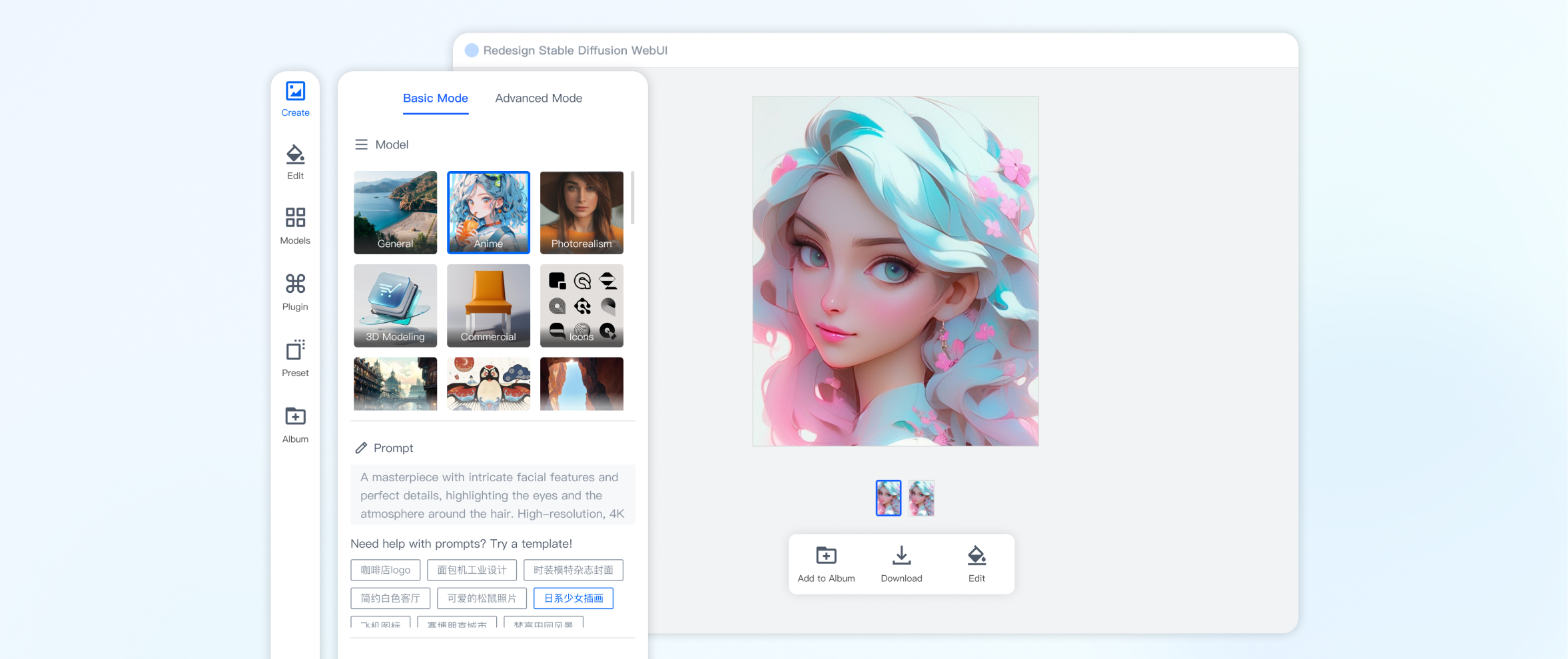
Because of a confidential issue, I am not able to present deeply about what I’ve done. If you are interested in my journey, please contact me to see how I tackled the challenge of redesigning the interface, solving immediate problems, and delivering a seamless user experience under tight deadlines.
Send me an email! Step 1: Competitor Analysis to Understand the Market
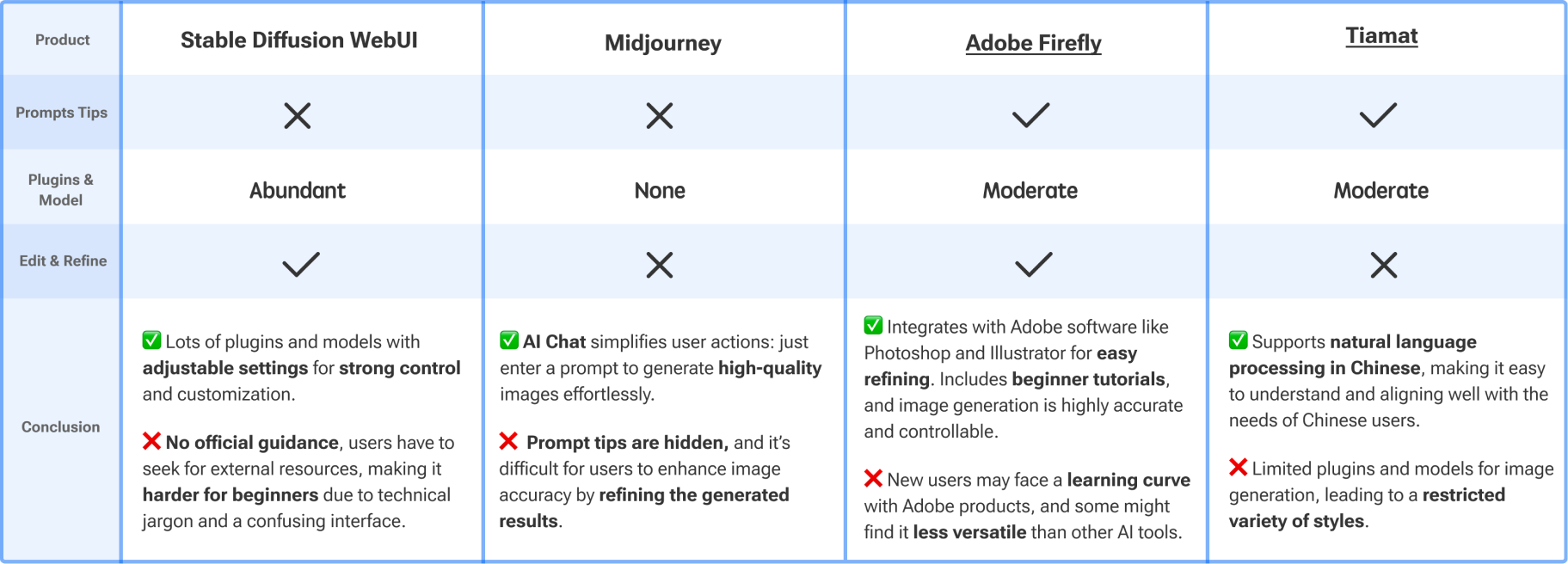
By looking at popular AIGC image generation products, I noticed that while they all offer text-to-image generation, they differ a lot in accuracy and control. This includes factors like available plugins, model resources, refining options, and user-friendliness. Even though Stable Diffusion WebUI has great customization features, many users still struggle to use it effectively.
SO WHAT WAS THE PROBLEM?
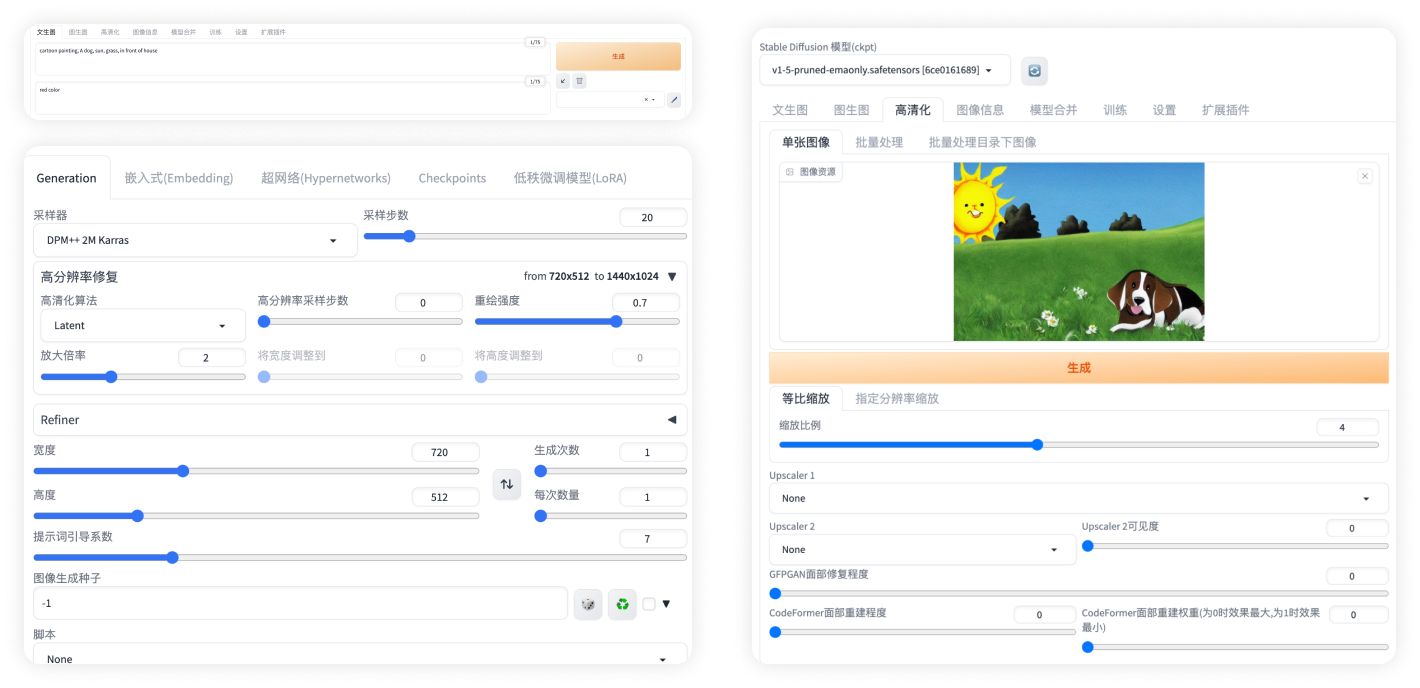
High flexibility leads to a steep learning curve and increased operational complexities.
The old version had many powerful features, but users struggled to find them. Even when they did, it was still tough to use effectively, especially for those without industry knowledge.
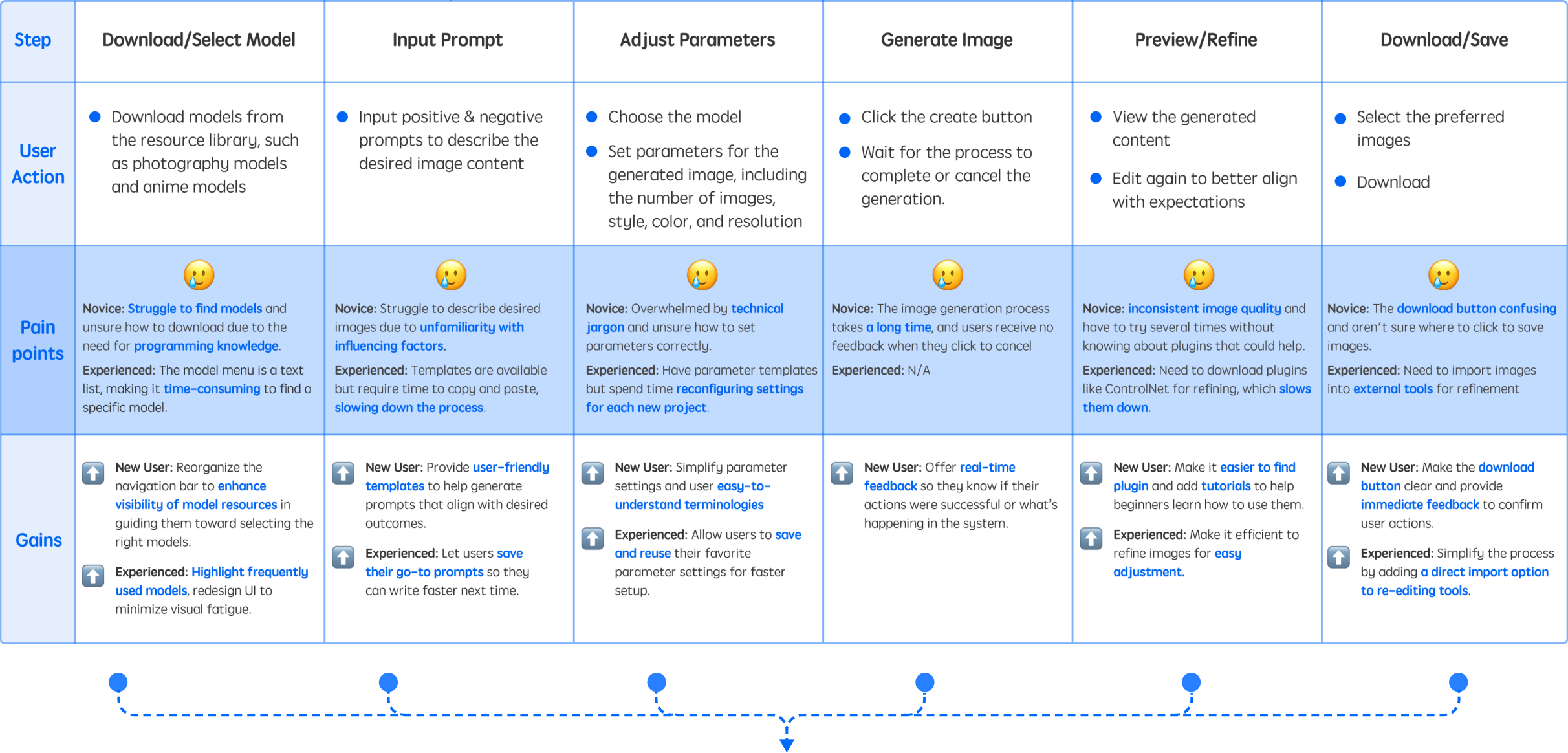
Step 3: Identify and Refine Pain Points Through User Journey Mapping
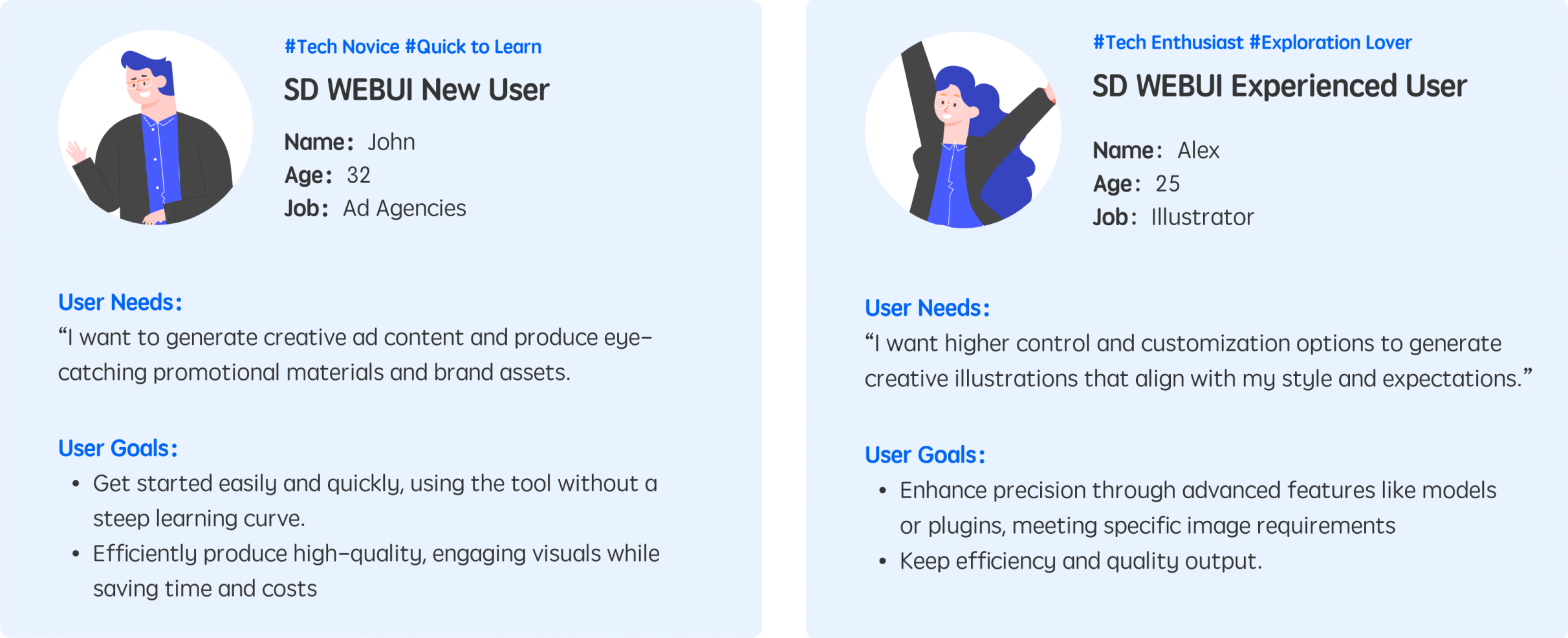
To better understand users' needs, I conducted interviews with 9 colleagues—both experienced users and novice users. I summarized the identified pain points and optimization opportunities in the table below.